Sensor Instruments
Entwicklungs- und Vertriebs GmbH
Schlinding 15
D-94169 Thurmansbang
Telefon +49 8544 9719-0
Telefax +49 8544 9719-13
info@sensorinstruments.de

Przetłumacz tę stronę:

Whitepaper


10.08.2026 Smarter textile sorting ()
10.08.2026 From plastic flakes to color-perfect recyclate ()
30.07.2026 Whiteness control of sugar in a vertical batch centrifuge ()
(SPECTRO-3-1000-COF-d50.0-MSM-ANA-V4A)
23.04.2024 Optical spray jet control ()
01.09.2023 Sensor systems for recyclate control in the plastics industry for laboratory and inline use ()
31.08.2023 Checking the plastic type of recyclates and virgin material using NIR technology (SPECTRO-T-3) ()
22.12.2020 SPECTRO-M-10-MIR - Kontrola Inline cienkich warstw oleju na metalu


10.08.2026

Smarter textile sorting
A next-generation, AI-supported multi-sensor sorting system for the circular textile exonomy

► Whitepaper (pdf)

Executive summary
Sorting is the decisive bottleneck of textile recycling. However advanced the downstream process, the quality of the recyclate is capped by the quality of the sort. Yet today's sorting lines are either labor-intensive and subjective, or built on plastics-recycling technology that was never designed for limp, bulky, multi-material garments.

This white paper introduces a next-generation textile sorting system – referred to throughout as the System. The System combines a purpose-built hybrid multi-sensor head (near-infrared, visible color, fluorescence, moisture, metal and structure-borne sound) with a vertical, flap-based ejection architecture that replaces energy-hungry compressed air with gravity and simple mechanical deflection.

The result is a sorting solution that is more accurate, more robust, dramatically more energy-efficient, and far better suited to real-world textiles than the systems on the market today. Independent of throughput class, the vertical flap concept cuts investment cost by roughly half, reduces operating cost by up to 90 %, and lowers ejection-related CO₂ emissions by up to 98 % compared with horizontal compressed-air sorting.

For textile recyclers and sorting operators, the System turns high-purity, material-specific sorting – the prerequisite for both mechanical and chemical recycling – into a scalable, economically viable process.  


The opportunity
Every year, roughly 92 million tons of textile waste are generated worldwide – spanning post-consumer clothing, production waste, returns and unsold goods. The largest single streams come from China (~22 million tons), the United States (~17 million tons) and the European Union (~12 million tons).
This growing "textile mountain" is also a growing raw material opportunity. Properly separated – by reusability, fiber composition, color, finish and contamination – used textiles can be:
  • reused,
  • mechanically recycled into new fibers, or
  • chemically recycled back into virgin-grade polyester or regenerated cellulose.
Sorting is the lever that unlocks all of it: it reduces misthrows, lowers the share sent to incineration and landfill, and is the precondition for reliable, reportable recycling rates.

Regulation is accelerating the shift
Across the EU, Extended Producer Responsibility (EPR) schemes are channeling funding into sorting and recycling infrastructure while eco-modulated fees make short-lived, hard-to-recycle products more expensive.

Digital Product Passports (DPP) will progressively make material and product information machine-readable for recyclers, and new rules aim to curb the export of unsorted supposed second hand goods.

Every one of these levers increases demand for exactly what the System delivers: fast, accurate, material-specific sorting.

Why sorting is the bottleneck
Textile recycling is not a single process but a system of sorting, pre-treatment and specialized recycling pathways. Compared with plastics recycling, it is a substantially harder technical problem, for four structural reasons:
  • High material diversity – natural fibers (cotton, wool, silk, linen), synthetics (polyester, polyamide, elastane) and a long tail of other materials all share the same waste stream.
  • A large share of blended fabrics – cotton/polyester/elastane blends are difficult to identify and even harder to recycle cleanly.
  • Numerous additives and finishes – coatings, dyes, zippers, buttons and trims interfere with both detection and downstream processing.
  • Historically non-recyclable product design – most garments in the waste stream today were never designed to be taken apart.
The consequence is a hard ceiling on recyclate quality. Mechanical recycling remains the industrial workhorse, but shredding and tearing shorten fibers, mix colors and reduce strength — a form of downcycling suited to nonwovens, insulation, wiping cloths and filling materials rather than high-quality garments.

Chemical recycling can deliver true fiber-to-fiber, closed-loop quality, but it is expensive, energy-intensive and highly sensitive to input purity: elastane, coatings, dyes and hardware all disrupt the process.

Both pathways therefore depend on the same thing – clean, homogeneous, correctly identified input. That is a sorting problem, and it is the problem the System is built to solve.

The state of the art – and its limits
Most sorting today is still manual or semi-automatic, judged by product type, visible quality, feel and color. Manual sorting is flexible and robust, but it is inherently subjective, labor-intensive and difficult to scale — and it cannot reliably identify blended fabrics such as cotton/elastane.

An ergonomic, sensor-assisted, semi-automatic sorting solution
The System can be seamlessly integrated into a semi-automatic sorting station where a human operator makes the final decision — supported by intelligent sensor technology.

Textiles are fed by conveyor into a buffer container; a laser light curtain at its upper edge drives a lifting floor that raises the stack until items reach an ergonomic pick height, so operators can work in an ergonomic upright position without stooping or digging.

Each garment is then guided over a worktable with flush-mounted glass covers. Beneath the covers, sensors analyze the material type (NIR), color, fluorescence, and moisture content. Optionally, metal and structure-borne sound sensors can be integrated to reliably detect buttons, zippers, or other accessories.

Based on this sensor data, the central control unit automatically determines the optimal sorting path.
At the same time, an illuminated LED strip intuitively guides the operator to the correct chute. Ergonomically angled table extensions allow for the integration of additional sorting channels without restricting the operator’s natural reach. From there, the textiles are routed directly into the respective collection bins via conveyor belts or chutes.

Compared to existing semi-automatic sorting solutions, this concept offers decisive advantages: improved ergonomics, increased throughput, and significantly enhanced sorting accuracy through the fusion of material, color, fluorescence, and moisture data. The result is a robust, space-saving, and cost-effective System that is intuitive to operate and paves the way for more efficient textile sorting.

Sensor based sorting
Sensor-based sorting is the emerging standard. NIR spectroscopy classifies cotton, polyester, polyamide and wool at conveyor speed, but struggles with dark and heavily dyed textiles, are masked by coatings, and does not reliably detect the low elastane concentrations that are nonetheless critical for chemical recycling. Hyperspectral imaging combined with AI improves the identification of inhomogeneous and blended materials, at the cost of higher investment and computational complexity.
RGB/3D vision and robotics add color, defect and shape detection, and address the fact that textiles are limp and must be gripped, disentangled and singulated before they can be sorted.

The limits become clearest in how today's automated machines eject sorted items. Systems adapted from plastics recycling fall into two camps:
  • Parallel detection (e.g. Pellenc ST, Tomra, Picvisa) detects and sorts several items side by side but offers only three discharge chutes per pass (blow up, blow down, or leave). Three fractions are rarely enough, so machines must be cascaded – multiplying cost and footprint.
  • Serial detection (e.g. Valvan, NewRetex, Redwave, Pellenc) singulates and sorts item by item into many fractions but requires a purpose-built machine concept and a large horizontal installation footprint.
Both camps share a decisive weakness: they sort with compressed air. Textiles are heavier and bulkier than plastic flakes or plastic bottles, so they demand higher air pressures than plastics sorting — and compressed air is one of the most expensive and most carbon-intensive utilities in industrial manufacturing. The result is high operating cost, high emissions, and a process that is fundamentally ill-suited to bulky garments.

Introducing the System
The System takes a different path. Instead of retrofitting plastics-sorting hardware, it is designed from the ground up for real textiles – combining a purpose-built sensor head with a vertical, gravity-assisted, flap-based sorting architecture. Two design choices define it: see more and sort smarter.

At a glance, the System delivers:
  • Comprehensive material identification through a hybrid, multi-modal sensor head – not NIR alone.
  • Vertical, flap-based ejection, that replaces compressed air with gravity and simple mechanical deflection.
  • AI-supported classification, that fuses every sensor signal into a single, reliable sorting decision.
  • Double-sided and zonal inspection, recognizing that a garment's back, sleeves and body may be different materials.
  • A cost-optimized, compact, robust and easy-to-install design that fits real sorting operations.
Vertical sorting architecture
Unlike existing horizontal systems, the System pre-sorts textiles vertically. Items are first singulated and transported upward – for example by a vertical conveyor fitted with hooks, or simply by an inclined conveyor when singulation is handled separately. At the top, each item is transferred horizontally and then released onto a steeply inclined slide.

At the top end, the textiles are placed on a steeply inclined chute. This allows them to glide in a controlled manner through the measurement area – the ideal condition for precise material identification and reliable sorting.

Reliable separation – the precise separation of individual garments – forms the basis for highly accurate material recognition.

The sensor head is positioned directly behind the chute and detects the passing textile through a robust optical window, made of sapphire glass, for example. As the garment passes the sensor, the System analyzes its complete material and color signature.

Sorting then takes place exclusively by gravity in a vertically arranged chute – without energy-intensive air jets – via a conveyor belt. The result is a compact, vertical machine architecture with minimal space requirements, rather than a large, horizontal system structure.

The hybrid multi-sensor head
The heart of the System is a purpose-built hybrid sensor. A single unit covers the visible range (RGB color) together with three separate NIR wavelength bands. A second hybrid sensor mounted immediately alongside adds three further NIR bands and a UVA source, which – combined with a color detector – enables fluorescence detection in the visible range.

Together, the two sensor heads provide six NIR channels, precise color information, and fluorescence data – the foundation for reliable, multimodal material detection in an exceptionally compact sensor platform.

Uniform illumination for maximum measurement quality:

Illumination is provided by LED sources spanning the NIR, visible (white-light) and UVA ranges, arranged as a ring around each detector and softened by a diffuser plate for homogeneous and long-lasting illumination. This ensures reproducible measurement results even under demanding operating conditions.
High-performance photodiode clusters enable fast, low-noise data acquisition at scan frequencies up to 10 kHz. This multi-modal measurement approach specifically overcomes the limitations of NIR-only systems: While color information improves the interpretation of the NIR spectrum – which can be influenced by textile colors – fluorescence, moisture, and acoustic measurement methods provide additional information that cannot be captured by NIR alone.

The sensor system is complemented by three further sensing modes:
  • Moisture sensing – a dedicated hybrid sensor uses two water-absorption bands (1450 nm and 1940 nm) against a neutral reference channel (1050 nm) to distinguish wet from dry textiles, catching damp or moldy items that slip through pre-sorting.
  • Metal detection – an optional detector, integrated flush into the surface, identifies zippers, buttons, buckles and metal trims.
  • Structure-borne sound – sensors rigidly coupled to a corrugated stainless-steel surface detect the distinct acoustic signature of glass, plastic, wooden or mother-of-pearl buttons and zippers as the textile passes. Contaminant-free textiles produce no significant signal; hardware produces a clear, measurable one.
Signal processing and AI
Each hybrid sensor is equipped with its own microcontroller and is intelligently networked via an RS-485 bus. Thanks to their high sampling rates and an optical entrance aperture that is significantly larger than that of spectrometers, the multiband sensors deliver an exceptionally high signal-to-noise ratio. This makes it possible to reliably identify even fast-moving textiles – while keeping system costs low.
A central microcontroller consolidates the measurement data from all sensors into a comprehensive overview and analyzes each object in real time. Optionally, AI provides additional support for classification. The results are transmitted both to the system control and to the indicator LEDs for the respective sorting position. This allows textiles to be sorted precisely and reproducibly based on any combination of material type, color, moisture content, and attached components – such as zippers, buttons, or other non-textile parts.

The sorting stage
Once every sensor signal has been analyzed and the destination shaft selected, the System waits for the trigger from a laser light-grid positioned immediately in front of the chosen shaft, then actuates the shaft flap. The textile drops into the side shaft and is carried onward – by conveyor or directly by chute – into its collection container.

Gravity instead of compressed air
The mechanical ejection system operates entirely without compressors or compressed-air nozzles. This saves energy, reduces operating costs, and increases the System’s reliability.

The ejection
The mechanical, gravity-assisted ejection ensures robust and fault-tolerant timing. The position of each laser light curtain is precisely calibrated to the response time of the corresponding chute flap. As a result, the System reliably compensates for the natural variability in the sliding behavior of different textiles.

Double-sided and zonal inspection
On the conveyor and during detection, each garment is unique due to its random orientation and shape. Furthermore, the front and back, as well as the sleeves and main body, can differ significantly in material, color, and composition. For this reason, the System uses a second conveyor arranged vertically and mirror-symmetrically to the first. This allows both sides of a garment to be inspected in a single pass.
Thanks to zone-specific multi-sensor inspection, individual areas such as sleeves, the torso, or the collar are analyzed virtually separately. The result is a significantly more precise material characterization, leading to a substantially higher sorting quality.

The decisive advantage: vertical flap vs. compressed-air ejection
The key difference from the sorting systems currently available on the market lies in the method of material ejection. Instead of horizontal compressed-air ejection, the System uses vertical, flap-based material guidance. This seemingly simple design difference improves not only cost-effectiveness but also process reliability and the sustainability of the entire sorting system. (...)

Technically Superior. Economically Compelling
For textile recycling, the vertical, flap-based ejection of compressed air technology is superior both technically and economically. Compressed air systems offer advantages only for very light, flat materials and extremely high throughput rates – but not when handling actual, bulky garments.
In practice, the vertical flap approach delivers impressive results across the board: It reduces capital costs by about 50%, cuts operating costs by up to 90%, and at the same time ensures significantly greater process stability when sorting real textiles.

Sustainability and EU regulatory alignment
The System’s advantages extend far beyond cost-effectiveness. Compressed air is one of the most CO2-intensive forms of energy used in industry, so replacing its use makes a significant contribution to reducing the environmental footprint. Compared to horizontal compressed-air ejection, vertical flap-based ejection generates up to 98% lower CO2 emissions.

That aligns the System directly with the direction of EU policy. As EPR financing rewards efficient, high-quality sorting infrastructure, as eco-modulation penalizes waste, and as Digital Product Passports make material data available for recipe-based sorting, operators need sorting technology that is simultaneously accurate, scalable and low-carbon.

The System’s marker capable sensor technology – including integrated fluorescence detection—is already designed for future tracer and DPP based sorting strategies. Combined with its energy efficient system architecture, the technology positions itself as a future proof solution for the next generation of textile sorting.

Technology roadmap
The System follows a clear technological development strategy and is designed to grow continuously in line with the requirements of the textile circular economy.
  • Short term (1–3 years) – expansion of automated sorting, sensor technology paired with manual quality assurance, and improved pre-treatment such as accessory removal.
  • Mid term (3–7 years) – marker and tracer systems, data-driven sorting logic, and stable supply chains feeding chemical recycling.
  • Long term – design-for-recycling, standardized material architectures, and closed-loop, fiber-to-fiber cycles.
The same principle applies across all stages of development: Only high-quality, material-specific sorting lays the foundation for scalable mechanical and chemical textile recycling. Ultimately, the quality of the sorting process determines the success of the textile circular economy.

Your strategic benefit
For textile recyclers and sorting facilities, the System transforms the industry’s greatest bottleneck into a sustainable competitive advantage. It detects significantly more material properties than conventional NIR systems, separates textiles into the exact fractions required by downstream recycling processes, and achieves this at a fraction of the investment and operating costs – as well as the carbon footprint – of compressed-air-based sorting systems.

The result is a compact, robust, and easily integrable solution that combines the highest sorting quality with maximum cost-effectiveness.

In a market being reshaped by EPR, digital product passports, and export restrictions, it is precisely this capability that is crucial for transforming the growing volumes of used textiles into a reliable, profitable stream of raw materials. 


10.08.2026

From plastic flakes to color-perfect recyclate
Inline color measurement and control for consistent recyclate quality

► Whitepaper (pdf)

From the flake mix to the desired recycled material color
When you think about the color consistency of recycled material, the first thing that usually comes to mind is sorting: color sorting of the packaging and, after shredding, washing and drying, color sorting of the flakes. Yet the fine-tuning that actually produces the target recyclate color only happens during the extrusion process.


Once food packaging has been sorted into PP by NIR sorting, white flakes dominate with a proportion of 50% to 70%, followed by transparent flakes at roughly 15% to 30%; only 10% to 20% are colored and less than 5% are black or dark gray. Depending on the target recyclate color, an additional flake color sorting stage can be switched into the line.

Setting up production for a new recyclate color using a customer sample (from plastics processor)
In practice, things often play out like this: a sales representative hands over the color sample requested by the customer, a plastics processor, either as a plastic plaque or directly as the granulate required. If it is an injection-molded plaque, the recycler's laboratory determines its L*a*b* color value. Production then sets out to reproduce that color from the plaque, i.e. the color of the pellets is compared visually with the color of the plaque. Once the team responsible on the line is satisfied with the result (a color match between plaque and recyclate), a recyclate sample goes to the color laboratory, where an injection-molded plaque is produced on the laboratory extruder and its L*a*b* value is then measured with a laboratory colorimeter. The color values of the two plaques, the customer's and the one produced in house, are compared. If the dE value (the color deviation) is acceptable, production is released. If not, the whole cycle of color matching on the line and re-measurement in the laboratory must start over.

If the color sample is supplied as granulate instead, part of the pellets is used to produce an injection-molded plaque on the recycler's laboratory extruder, so that the color value can again be measured with a colorimeter in the laboratory. From there, the procedure on the line follows exactly the route described above.

There is also the option of using the granulate sample supplied by the customer directly on the line as a reference sample and comparing the current recyclate color against it visually. If the two matches and the laboratory check described above confirm this, production can be released. If the laboratory does find too large a color deviation, a further attempt is made in production to reduce the remaining color difference.

So how do you achieve consistent color in the recyclate you are aiming for?
An experienced line operator has a good idea of which masterbatches will be needed once they have seen the reference pellets or a reference plaque. The next step is to find the recipe, i.e. how much of each masterbatch must be metered in. Here, too, fine tuning relies on comparing the target state (reference) with the actual state (current recyclate). Making matters harder, the composition of the flakes themselves can fluctuate. On top of that, the throughput time of several minutes from the flake feed into the extruder to the finished pellets must be considered.

Sample after sample is compared against the reference granulate or reference plaque, and the metering units are readjusted each time. This process can easily stretch over several hours before a satisfactory result is achieved.

And that is before the time needed to determine the color value of the pellets in the laboratory, including producing the injection-molded plaques from the respective recyclate. This step takes time as well, typically somewhere between one and two hours.

The control loop with manual support
Alongside achieving the smallest possible color difference from the reference granulate or reference plaque, the time it takes to get to an acceptable color deviation is decisive for economic success. After all, a single line produces some 1 to 2 metric tons of recyclate per hour, and a metric ton currently fetches around EUR 1,000. If a control cycle takes five hours to reach an acceptable color deviation, that amounts to an economic loss of EUR 5,000 to EUR 10,000. Add the time for the laboratory measurements and several more hours can follow.

A typical control loop looks like this:
  • The setpoint is the reference color value defined by the reference granulate or the reference plaque.
  • The comparison point (comparator) is the line operator, who compares the actual value (measured value), which the operator also determines (making the operator the sensor as well), against the setpoint. The role of the controller is likewise taken on by the line operator.
  • The final control element (actuator) is formed by the metering units, which the operator also must set.
  • The controlled system (process) is formed by the extruder, the melt filter, the pelletizer and the drying unit. Bear in mind that the throughput time between masterbatch feed and drying unit takes several minutes (approx. 5 to 10).
The operator, though, is not exactly comparable to an I-controller. Keen to reach the desired result as quickly as possible, they typically meter in more at the final control element (metering unit) than is actually required. The target color value is overshot, and the next correction tends to produce a deviation in the opposite direction.

Sensor-assisted manual control

To cut setup times, an inline color measurement system was integrated into the vibrating drying trough. The color sensor head is mounted at a typical distance of 85 mm and can be adjusted in height on a rail. The electronic and optoelectronic parts of the color sensor system are housed in a stainless-steel enclosure that also contains a panel PC with monitor, with a green/red LED warning lamp mounted on the enclosure. This means the color sensor system can take over the roles of both the sensor and the comparison point in the control loop.

To do so, the sensor first has to be shown the reference granulate. The aluminum plate that sets the height of the pellet stream and also carries the sensor is pushed upwards, and a table is fitted on which the granulate reference sample can be placed. Ideally, the granulate surface sits 85 mm from the sensor head.

Teach-in is then carried out with the pellets in motion, typically over 30 s. The reference color value L*a*b* ref determined in this way serves as the guide value for the subsequent measurement. A reference file for each reference granulate can also be stored via the PC software.

Once the reference value has been determined, measurement of the recyclate stream can begin. The tabletop is removed and the aluminum plate is lowered into the pellet stream so that its surface is again 85 mm from the color sensor head.

Measurement starts. The color measurement system then reports the current L*a*b* value and its deviations dL*, da* and db* to the reference on the monitor, in graphical as well as numerical form. Experience shows that setup times are reduced by a factor of 3, including for references already stored, since these can be used in exactly the same way.

Because the operator still acts as the controller and operates the final control element, unwanted color deviations continue to occur here as well, deviations that a fully automatic control loop would certainly reduce.

Even so, the sensor-assisted control loop already brings clear benefits. First, a considerable saving in time: between EUR 3,000 and EUR 6,000 can be saved on the way to the ideal value. Second, the LED warning lamp tells the operator in good time when the color value drifts outside the specified tolerance band during running production. That takes further time pressure off the operator, which again pays off economically. In addition, all data is recorded, so recyclate quality can also be reviewed after the event.

The fully automatic control loop
All that remains is to let the software take care of the controller. The integral component of the controller depends on the controlled system (the throughput time of the material) and can be entered on the operator interface of the panel PC. The outputs of the control system are connected to the respective metering units (final control elements). The speed of the metering screw can usually be driven by an analog signal (0 V … +10 V or 4 mA … 20 mA). A typical procedure then looks like this:

For a new recyclate that is not yet stored in the system:
  • Teach-in the reference recyclate
  • Enter the reference value in the teach table of the PC software
  • Determine the master batches required for production empirically
  • Save the reference values and the recipe (masterbatch quantity at each metering unit)
  • Start measurement with setpoint / actual value comparison
  • Automatic reduction of the color deviation by closed-loop control
For a recyclate already set up in the system:
  • Download the data (reference value and masterbatch recipe) from the relevant file
  • Start measurement with setpoint / actual value comparison
  • Automatic reduction of the color deviation by closed-loop control
Benefits
  • Time-consuming manual setup is eliminated
  • The target recyclate color (reference value) is reached faster
  • The operator's workload is dramatically reduced
  • Color variation in the recyclate is reduced
Das Inline-Farbmesssystem COL-SYS-85-CL
  • Aluminum profile frame
  • Stainless steel enclosure for the control electronics and panel PC, including warning light and color sensor
  • Height adjustment for the color sensor frontend
  • Color sensor frontend
  • Aluminum plate for adjusting the pellet flow level
  • Removable tabletop for pellet reference tray
  • Mechanically customizable


30.07.2026

Whiteness control of sugar in a vertical batch centrifuge

Application description:
In sugar production, the whiteness of the sugar is a key quality criterion. The SPECTRO-3-1000-COF-d50.0-MSM-ANA-V4A color sensor is used for the automated monitoring and control of the washing process in a vertical batch centrifuge. The sensor is installed in the lid of the centrifuge, alongside the axis of rotation, and measures the color of the sugar cake adhering to the basket wall without making contact.

  
Typical installation scenario in the centrifuge lid: SPECTRO-3-1000-COF-d50.0-MSM-ANA-V4A sensor extended (left image) and in the measuring position (right image)

During the washing process, color values are continuously recorded in the CIE L*a*b* color space by the SPECTRO-3 sensor. The measured variables L* (luminance), a* (red-green axis) and b* (yellow-blue axis) are available as analogue output signals for process control.

Once the basket has reached a specified rotational speed, quality monitoring begins. In particular, the b* value is monitored, as this correlates directly with the yellowish color of the sugar cake. At the start of the washing process, the current b* value is recorded as a reference value. During the subsequent rinse cycle, the control system continuously monitors changes in this value. As soon as the b* value has fallen to a defined level – for example, 50 per cent of the initial value – this is interpreted as the desired level of cleanliness or whiteness having been achieved, and the water supply is automatically stopped.

As a result, the washing process is no longer controlled by time or volume but is instead directly quality controlled. The control system compensates for batch-to-batch variations in the color and amount of adhering syrup, thereby ensuring a consistent target whiteness level with minimal water consumption.

Economic benefits:
Direct control based on the measured whiteness offers several economic advantages:
  • Reduced water consumption, as only the amount of water actually required is used. 
  • Lower energy consumption due to the reduction in subsequent evaporation and treatment loads. 
  • Prevention of excess rinsing, thereby minimizing sugar losses into the drains. 
  • Consistent and reproducible product quality, regardless of fluctuations in raw materials. 
  • Optimized cycle times, as the washing process is stopped immediately once the target whiteness level is reached. 
  • Increased plant throughput through shorter and more reproducible process cycles. 
  • Reduction in scrap and rework through continuous quality monitoring during the process. 
  • The measurement system pays for itself quickly through savings on water, energy and product losses.
The inline measurement of L*a*b* color values and the automatic shut-off of the water supply when a defined b* value is reached, enable efficient, quality-oriented process control, which sustainably improves both cost-effectiveness and product quality in sugar production.

► Whitepaper (pdf)
► Data sheet SPECTRO-3-1000-COF-d50.0-MSM-ANA-V4A sensor (pdf)


23.04.2024

Optical spray jet control

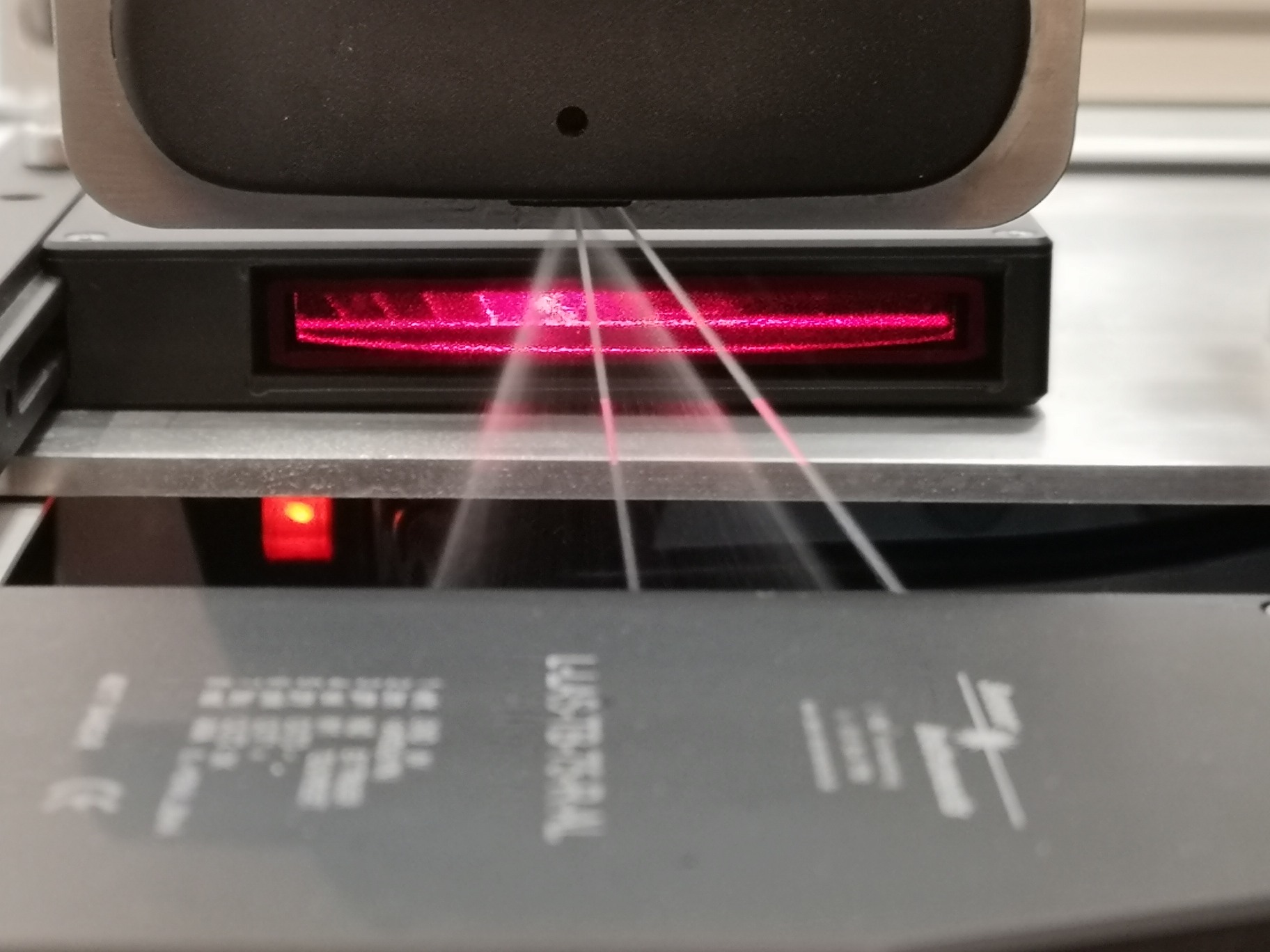
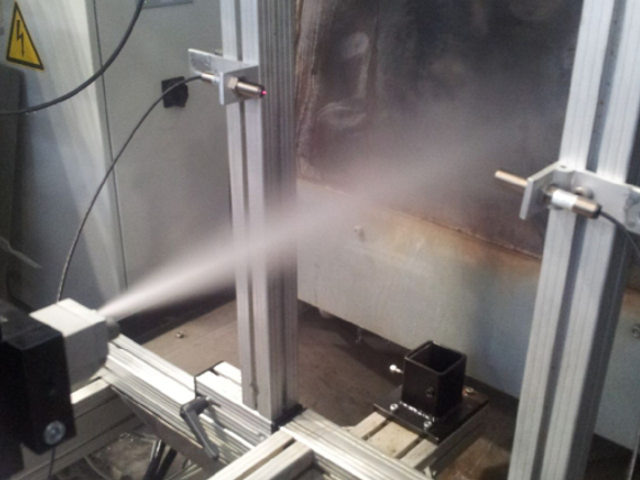
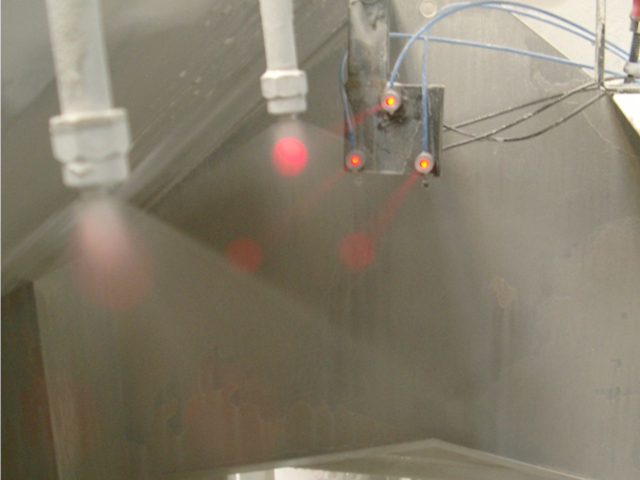
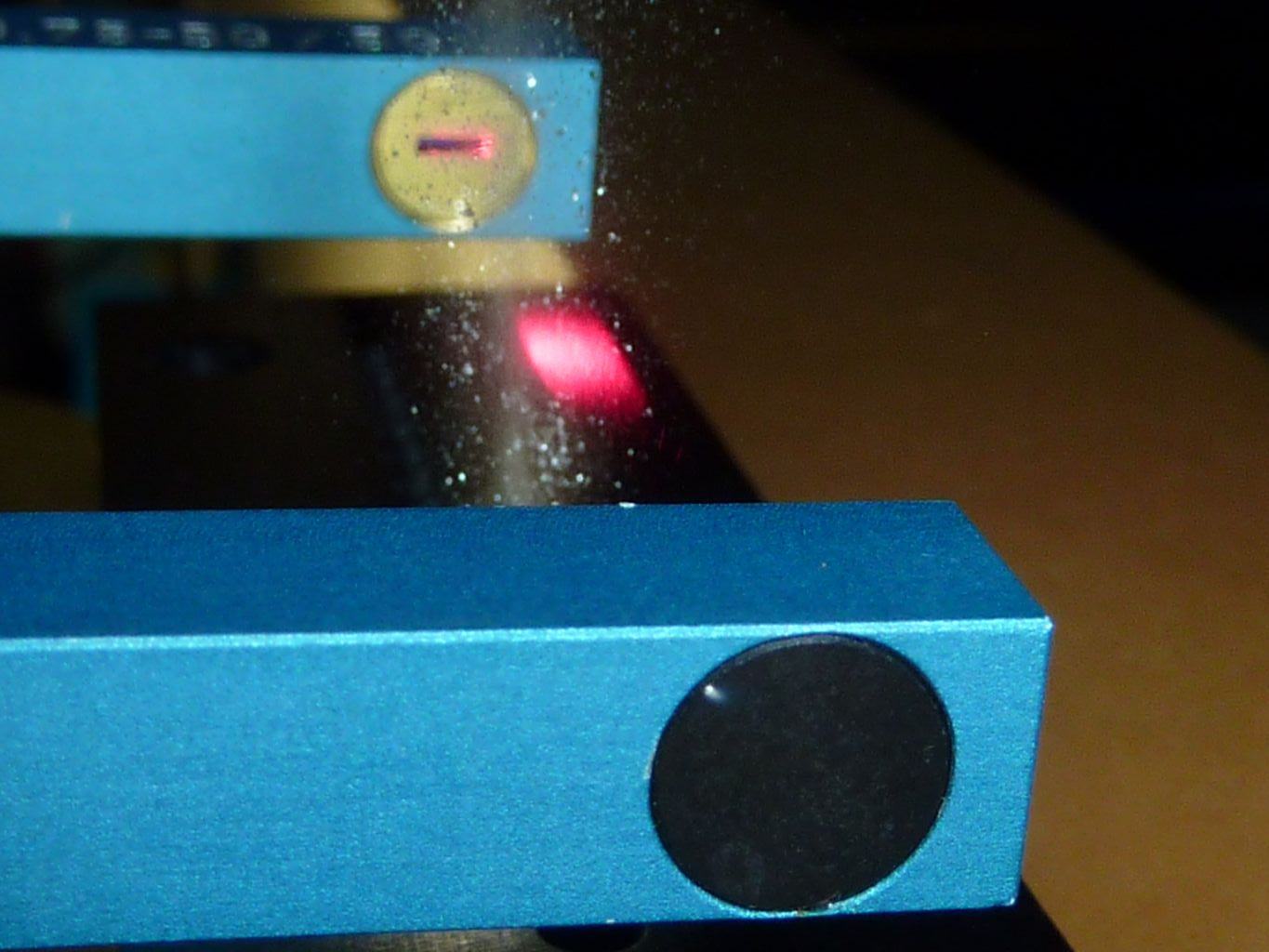
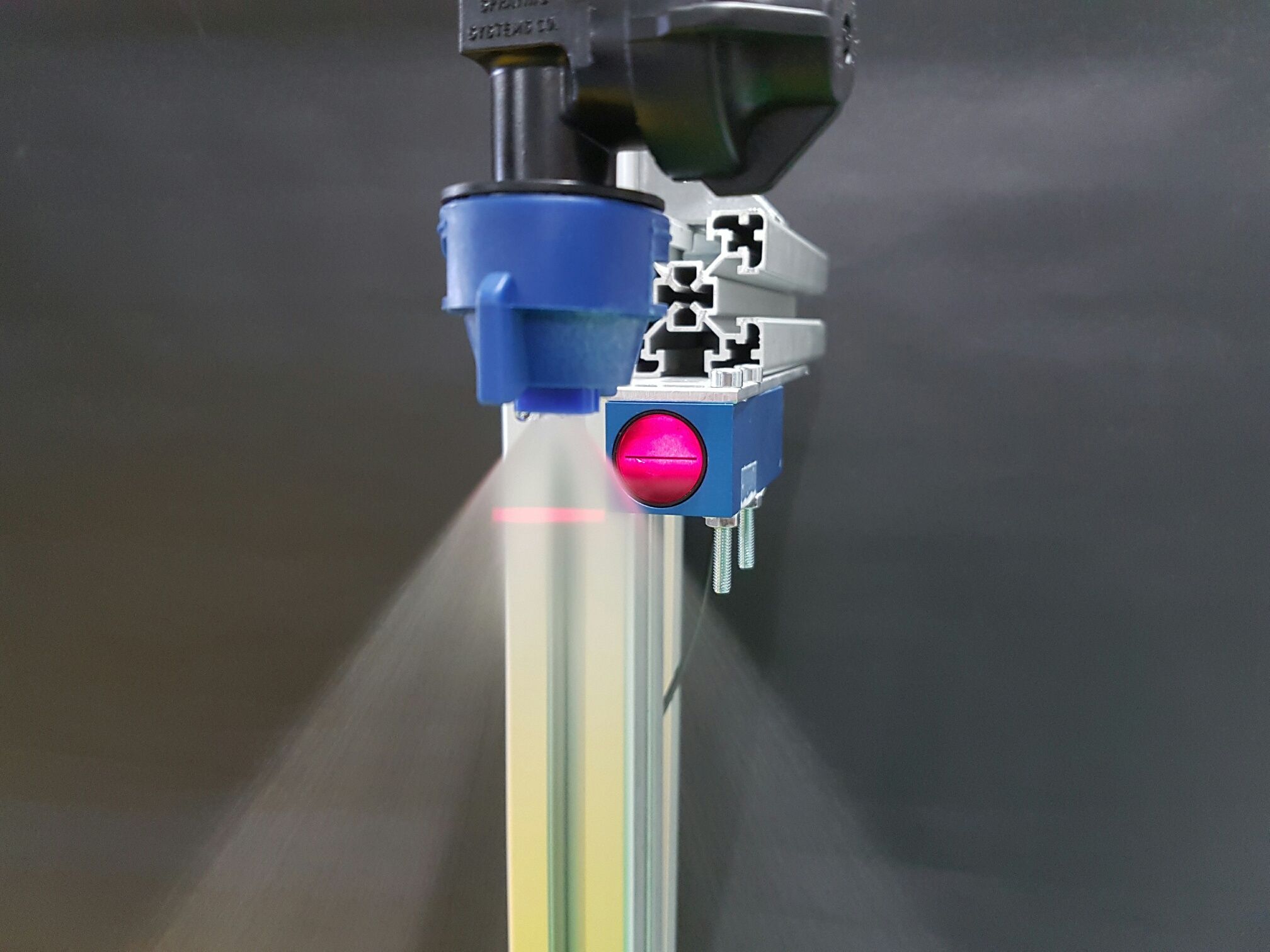
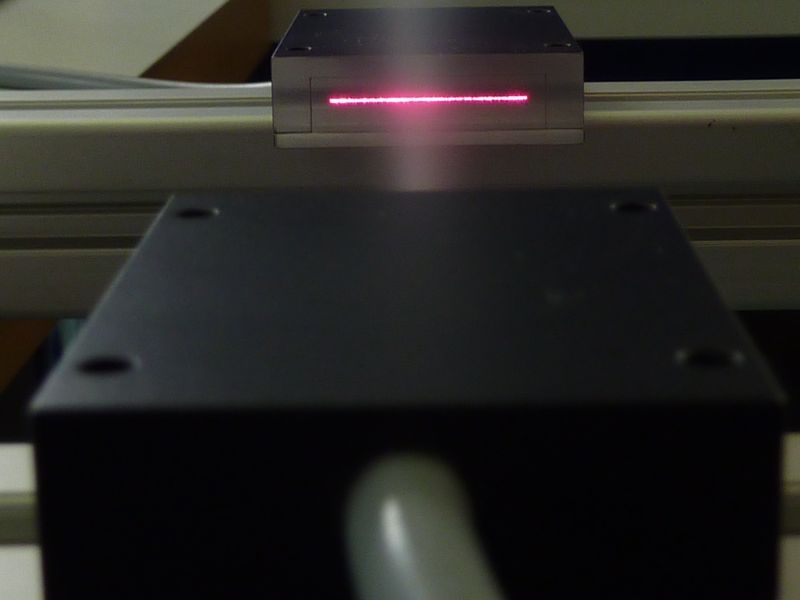
When designing spray systems, it is important to ensure that the sensor technology is matched to the size of the spray cone and the spray volume of the application in question. Furthermore, the geometry of the spray cone and the spray quantity depend on the medium used (primer, adhesive, solvent, water, alcohol, paint, etc.) as well as on the spray nozzle opening, the overpressure and the spray quantity dosage. Particularly when using tough, adhesive media (glue) as a spraying agent, it can happen that part of the spray nozzle opening sticks, which leads to a change in both the spray quantity and the spray geometry. As a result, the spray jet can be changed in terms of direction as well as opening angle.

When designing a spray jet control system, it is important to address some key questions:
  1. Is the qualitative evaluation of the spraying process (yes/no or spraying process is ok/not ok) sufficient, or is a more detailed analysis (jet geometry, spray quantity) also required?
     
  2. Which medium (primer, adhesive, solvent, water, alcohol, paint, etc.) is sprayed and how is the medium optimally scanned (interaction with optical scanning: droplet size and distribution)?
     
  3. Which influencing variables determine/disturb the quality of the spray jet in the process? What are the general conditions for optical scanning of the spray process?
The aim of inline spray jet control is automated quality control of the spray process during the production process

The following document describes briefly the measurement principle, and, in the second section, the methods that can be used for inline control of spray jets in transmitted light. The final section deals with spray jet control in explosive areas.

► Whitepaper (pdf)
► Product overview


01.09.2023

Sensor systems for recyclate control in the plastics industry for laboratory and inline use

While downcycling of plastic products still predominated in the past, the form of recycling in which the reused plastic is put to the same or a comparable use is now becoming increasingly important. This in turn means considerable additional technical effort in separating and sorting the items delivered to the recycling plant throughout the recycling process

After separation of as many non-plastics as possible, for example by means of metal separators and wind separation, sorting is currently primarily by color (color sorting systems) and type of plastic (NIR cameras). Despite pre-sorting, where mainly whole articles are checked, as well as post-sorting (after shredding the plastic articles and subsequent washing) of the plastic particles known as flakes, it is not possible to achieve 100% grade purity. Certain variations in color must also be expected..

In order to allow unrestricted use of the recyclates produced in this way, they must be checked for purity before the next processing step, at the very latest immediately before extrusion. Typically, this could be done by a metering system equipped with appropriate sensors. The degree of purity of both the color and the type of plastic is monitored. If the purity falls below a certain level, less recycled material is added and more virgin material is added, so that the deviations in the final article in terms of color and plastic type are within the required tolerances.
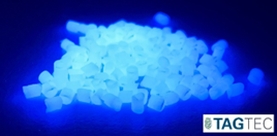


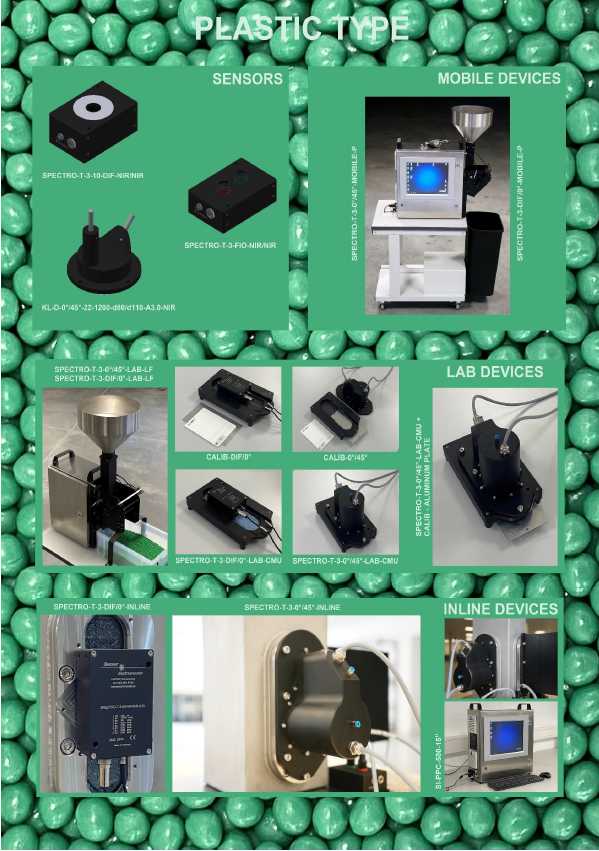
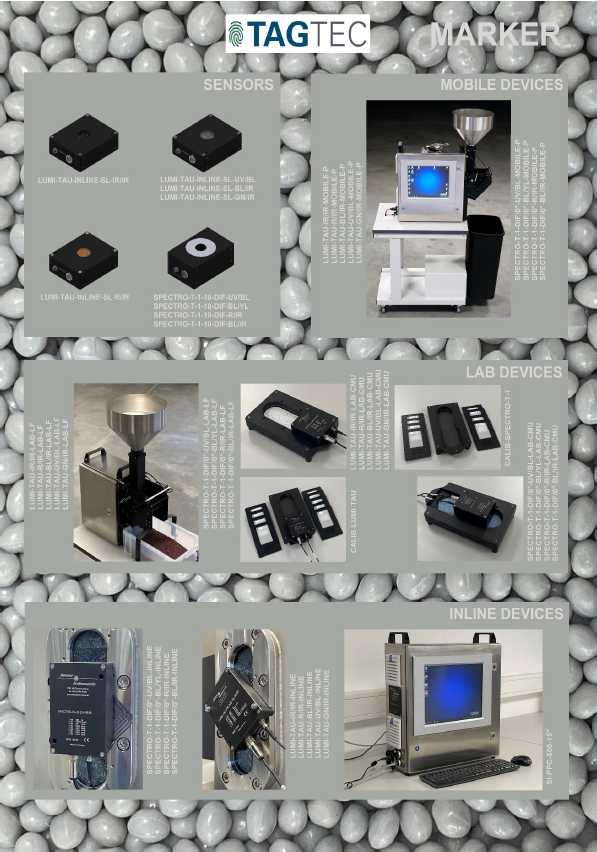
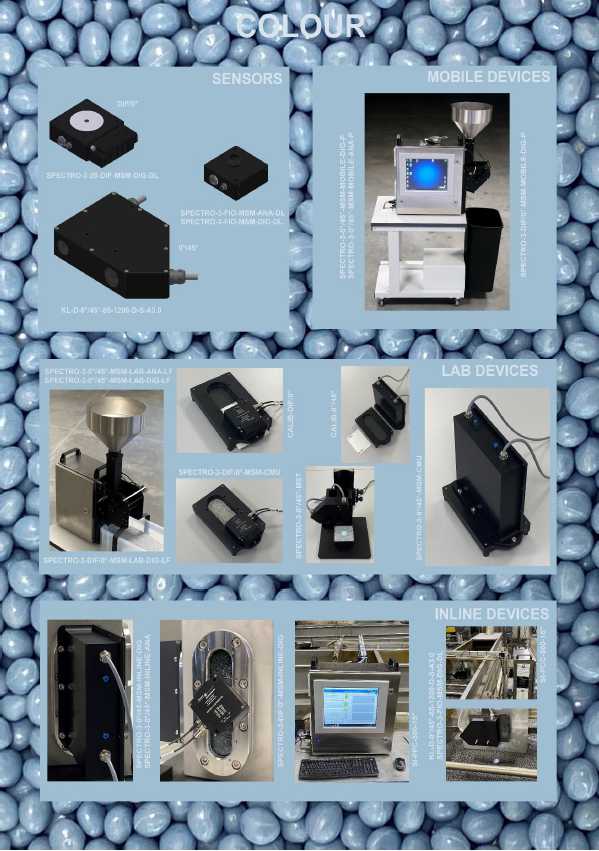
Furthermore, additional sensors can be used to detect a marker from the TAGTEC family contained in the recyclate (contained in the masterbatch from Gabriel Chemie). In the case of articles of the same color and plastic type, markers are used, for example, to distinguish between a clear PET ketchup bottle and a clear PET shampoo bottle. In addition to the actual sensor technology for testing the color, the type of plastic and the presence of any TAGTEC markers, the company Sensor Instruments also offers test systems for the laboratory, including the appropriate accessories for calibrating the devices, as well as inline devices, which will be explained in more detail below.
 
► Whitepaper (pdf)
► Product Overview (pdf)


              Color                  Plastic type              Marker    
  
22.08.2023


31.08.2023

Checking the plastic type of recyclates and virgin material using NIR technology (SPECTRO-T-3)

Open spectrographs, designed as hyperspectral cameras, are usually used in the recycling sector to perform the separation of different plastics. Working in combination with a broadband NIR light source (e.g. built up from high-intensity halogen spotlights), these cameras combine a moderate spatial resolution with a good spectral resolution of the objects. A further procedure directs a high-intensity NIR light source onto a surface to be scanned via a polygon mirror, whilst an optical unit is directed onto the polygon mirror. This means that part of the NIR light impinges on it after it has impinged on and been reflected from the object via the rear optical path, from where it is directed onto the aperture of an NIR grating spectrometer. Both procedures enable the spectral detection of a relatively large NIR wavelength range with simultaneous spatial resolution. This means for example, that different objects adjacent to each other on a conveyor belt and which pass through the detection area simultaneously are detected as separate objects, whilst being spectrally differentiated.

Plastic granulates on the other hand, do not require individual spectral differentiation. Instead, an integral process should record as many plastic pellets as possible at the same time, thereby obtaining reliable information about the quality or purity of the product. The complex technology that would be necessary to determine the spatial resolution is unnecessary and can be dispensed with. In principle however, an NIR spectrometer with optics and NIR illumination could be considered, but would represent a cost-intensive solution.

A more cost-effective alternative is a system that works in accordance with the three-range procedure. This measuring procedure directs three different NIR LED types (each LED type covers a specific wavelength range in the NIR) at the plastic granulate to be investigated, and a broadband NIR receiver detects the light reflected diffusely by the pellets. This is converted and passed on to an evaluation unit.
 
► Whitepaper (pdf)


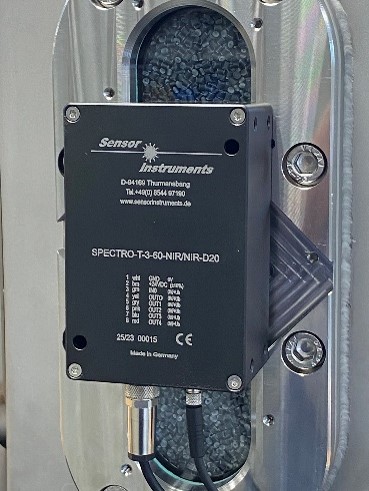
   SPECTRO-T-3-60-NIR/NIR-D20 
   (NIR sensor fixed optics version)
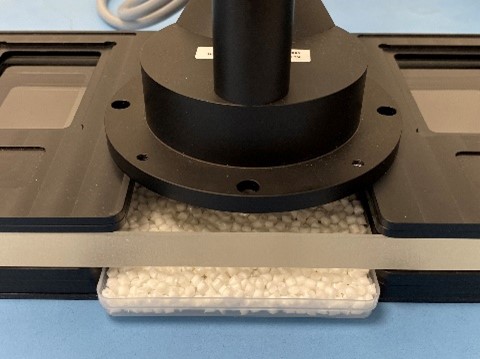


   SPECTRO-T-3-FIO-NIR/NIR +
   KL-D-0°/45°-22-1200-d80/d110-A3.0-NIR
   (NIR sensor fiber optics version)
31.08.2023


22.12.2020

SPECTRO-M-10-MIR - Kontrola Inline cienkich warstw oleju na metalu

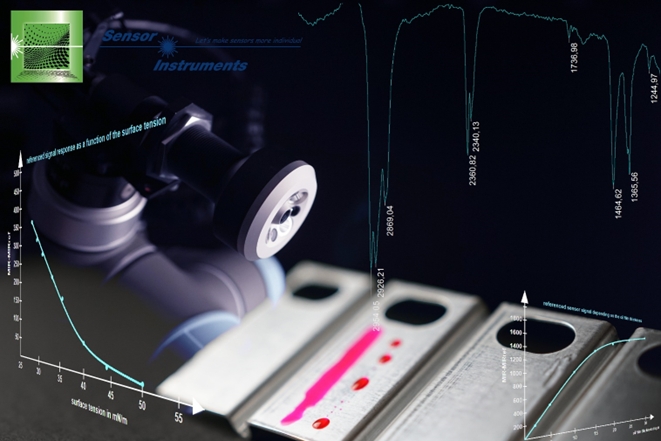
Proces pomiaru MIR wprowadzony do czujników SPECTRO-M został rozwinięty przez Sensor Instruments w celu badania cienkich warstw organicznych na metalowych powierzchniach. Czujniki SPECTRO-M są przeznaczone właśnie do detekcji i kontroli cienkich filmów olejowych na metalu.

W praktyce chodzi o to, że proces usuwania oleju z wytwarzanych części powinien być kontrolowany lub musi być kontrolowana homogeniczność jego warstwy. W trakcie wykonywania testów towarzyszących badaniom ustalono także, że w systemie można bardzo dobrze rejestrować właściwości parowania oraz pozostałości oleju na powierzchniach metalowych w rzeczywistych warunkach zastosowania (cienkie warstwy)..

W tym celu przeprowadzono testy na specjalnych olejach do tłoczenia szeregu CLF z gatunku Raziol, których wyniki zamieszczono w Rozdziale 6 w tym opracowaniu.

Prezentowany dokument opisuje zasadę działania czujnika w procesie Inline SPECTRO-M-10-MIR/(MIR1+MIR2) firmy Sensor Instruments. Kolejne czujniki SPECTRO-M posiadające inną geometrię pomiaru są opracowywane. Oprócz tego jako wiodąca firma w dziedzinie czujników specjalnych jesteśmy w stanie przygotować technologię do specjalnych zastosowań i życzeń Klienta.
 
► Whitepaper (pdf)

22.08.2023


NEWS

Udział w targach:

 •   Fakuma 2026
 •   Textiles Recycling Expo 2027

więcej...


Whitepapers:

Inteligentne sortowanie tekstyliów
Wieloczujnikowy system sortowania nowej generacji, wspierany przez sztuczną inteligencję, przeznaczony dla gospodarki o obiegu zamkniętym w branży tekstylnej
()
 
Od płatków tworzywa sztucznego do recyklatu o idealnym kolorze
Pomiar i regulacja koloru w linii produkcyjnej zapewniają stałą jakość recyklatu
()


Kontrola barwy cukru w pionowej wirówce okresowej
(z wykorzystaniem czujnika barwy SPECTRO-3-1000-COF-d50.0-MSM-ANA-V4A)
(

więcej...
 
Broszury:


Kontrola strumienia natrysku inline
Czujniki i systemy czujników do monitorowania strumienia natrysku inline


więcej...

Artykuł specjalistyczny:

  Automatically Adjusting to the Desired Color
Constant Recyclat Color Values through Inline Measurement  
Plastics Insights 
05/2025


więcej...


Wideo:


Systemy czujników dla branży recyklingu tworzyw sztucznych
Pomiar barwy recyklatów


Nowe aplikacje:

Wykrywanie wgnieceń i okrągłych wgłębień w wytłaczanych taśmach metalowych
(N° 801)
Rozróżnianie komponentów wykonanych ze skóry, materiałów tekstylnych i tworzyw sztucznych do wnętrza pojazdu
(N° 802)

 
Pomiar koloru pokrywek z tworzywa sztucznego
(N° 803)

więcej...


Co to jest ...
... napięcie powierzchniowe?
... parowanie oleju?
... pomiar grubości warstwy
    oleju?

więcej...


Nowości w oprogramowaniu:

SPECTRO3-MSM-DIG-Scope V1.5 (2021.10.20)
V1.5.2

więcej...


FIND US ON ....

Facebook X (Twitter) Instagram Youtube in


TOP